Capacity Building Transformation: From Classroom to All-Of-World Approaches
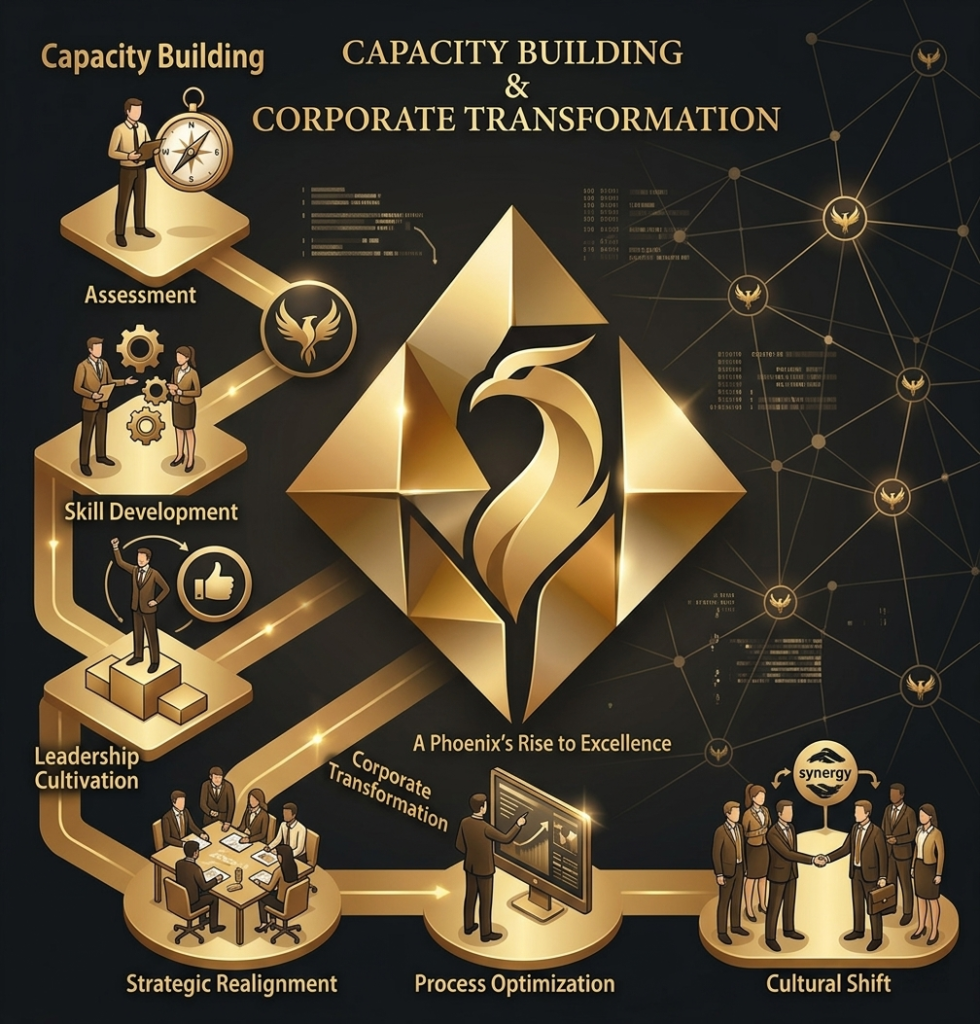
Capacity building has traditionally been understood as training workshops, skill transfer, or technical assistance. Yet, in today’s interconnected world — shaped by digital disruption, fragile contexts, and global crises — this narrow approach is no longer sufficient. True transformation requires moving from classroom-centered learning to an all-of-world approach, where countries, institutions, and communities actively learn from and support one another, and where technologies like artificial intelligence (AI) amplify reach and effectiveness.
From Isolated Training to Collective Learning
Historically, capacity building often focused on individual skill development within siloed contexts. However, knowledge retention and institutional resilience are limited when learning does not translate into systems and structures (UNDP, 2009). The challenge is not only how to build skills but how to connect these skills across borders and sectors to create collective resilience.
For example, lessons learned in emergency response in Lebanon can inform preparedness frameworks in Jordan. Similarly, Iraq’s energy sector reforms can provide insights into managing safety risks in fragile economies elsewhere. The exchange of practices and lived experiences across countries transforms capacity building into a global feedback loop of learning and adaptation.
Measuring and Scaling Across Borders
The World Bank’s Capacity Development Results Framework (CDRF) emphasizes the importance of measuring impact beyond inputs (World Bank, 2011). When applied globally, such frameworks can benchmark and compare capacity-building outcomes across different national contexts, encouraging cross-country accountability and shared progress.
This also creates opportunities for regional hubs of excellence — for instance, Gulf Cooperation Council (GCC) countries can become leaders in safety, digital transformation, and governance, offering scalable models that can be adapted in neighboring fragile states.
The Role of AI in Global Capacity Building
Artificial intelligence has the potential to redefine capacity building in three major ways:
- Predictive Analytics for Risk & Governance : AI can analyze cross-border data to anticipate emerging risks, from pandemics to climate shocks. This allows countries to prepare proactively, rather than reactively.
- Personalized and Scalable Learning: AI-powered learning platforms can adapt training to individual learners, languages, and contexts. This enables a globally connected classroom, where lessons from one country are translated and applied in another almost instantly.
- Cross-Country Knowledge Sharing: AI-driven platforms can map best practices across nations, identifying what works in fragile environments and scaling these lessons to others facing similar conditions. By doing so, AI becomes a bridge of knowledge, accelerating what OECD (2006) identifies as the need for adaptive, locally owned, and context-sensitive solutions.
Towards a Global Ecosystem of Capacity
The future of capacity building must embrace an ecosystem mindset:
- Governments share regulatory lessons.
- Universities co-develop digital curricula.
- International organizations provide benchmarking frameworks.
- AI-enabled platforms connect insights across geographies.
In fragile contexts, this ecosystemic approach ensures that no country learns in isolation. Instead, nations leverage collective intelligence, accelerate resilience, and co-create pathways of stability and progress.
Conclusion
Capacity building must transform from a localized, classroom-driven activity into a global, connected, and AI-empowered ecosystem. By fostering cross-country collaboration, integrating AI-driven tools, and embedding measurement and governance frameworks, we can move beyond training individuals to strengthening systems of resilience that span borders.
As global crises increasingly demand shared solutions, the capacity we build today will define the resilience we sustain tomorrow.
References
- OECD. (2006). The challenge of capacity development: Working towards good practice. Organisation for Economic Co-operation and Development. https://www.oecd.org/dac/governance-development/capacitydevelopment.htm
- UNDP. (2009). Capacity development: A UNDP primer. United Nations Development Programme. https://www.undp.org/publications/capacity-development-undp-primer
- World Bank. (2011). The capacity development results framework: A strategic and results-oriented approach to learning for capacity development. World Bank. https://openknowledge.worldbank.org/handle/10986/27312
- Broadband Commission Working Group. (2022). Artificial intelligence and digital transformation competencies for civil servants. Broadband Commission. Broadband Commission+1
- UNESCO. (2025, February 20). UNESCO’s AI competency frameworks for students and teachers. UNESCO. cosn.org+9UNESCO+9ResearchGate+9
- United Nations. (2024, September 19). Global AI fund proposed to support developing nations. The Guardian. The Guardian
- TechRadar Pro. (2025). How AI agents, synthetic data, and executive literacy build resilient organizations. TechRadar
- World Economic Forum. (2025, May 22). Why AI literacy is now a core competency in education. World Economic Forum
- OECD (n.d.). Global Partnership on Artificial Intelligence (GPAI). OECD. Wikipedia
- Financial Times. (2025). AI is the new foreign aid. ft.com
- Wikipedia. (2025). Deep Learning Indaba